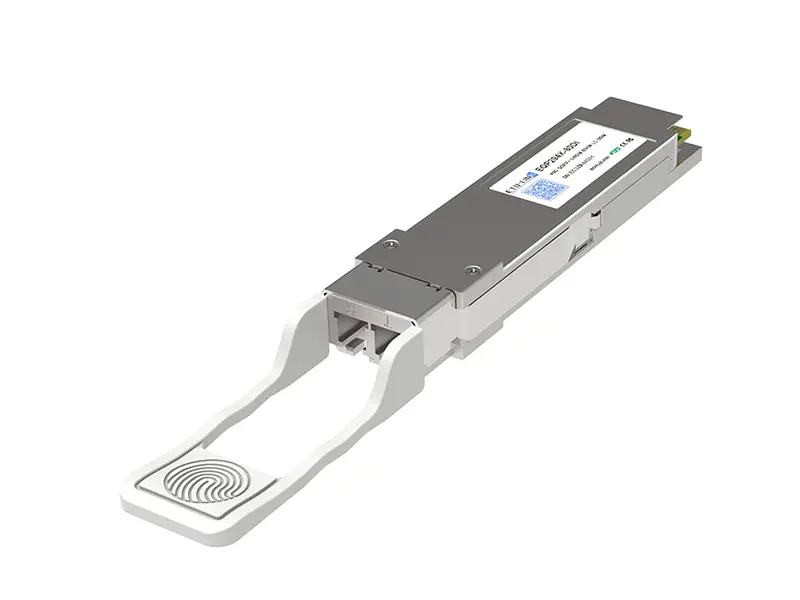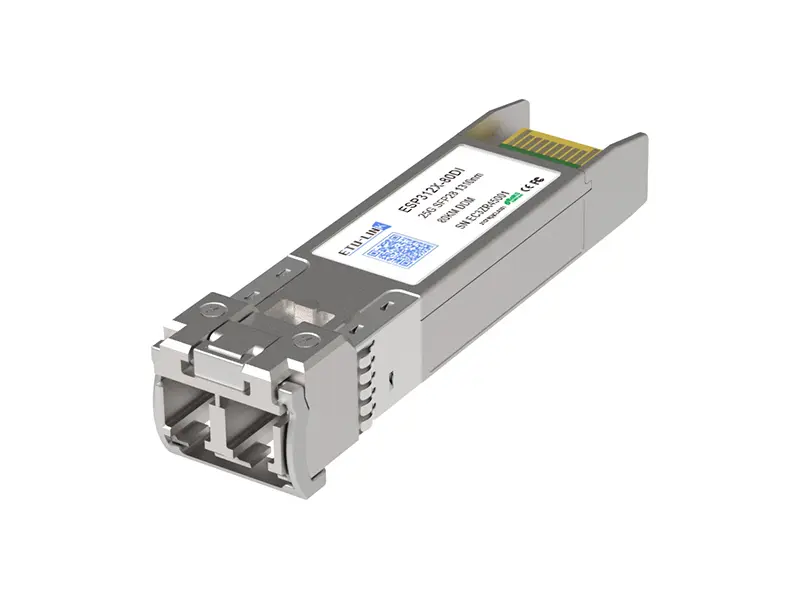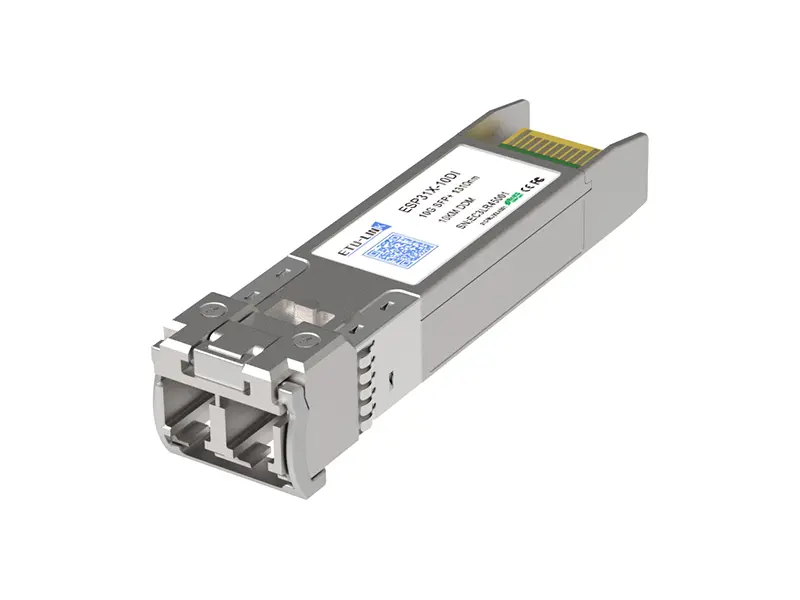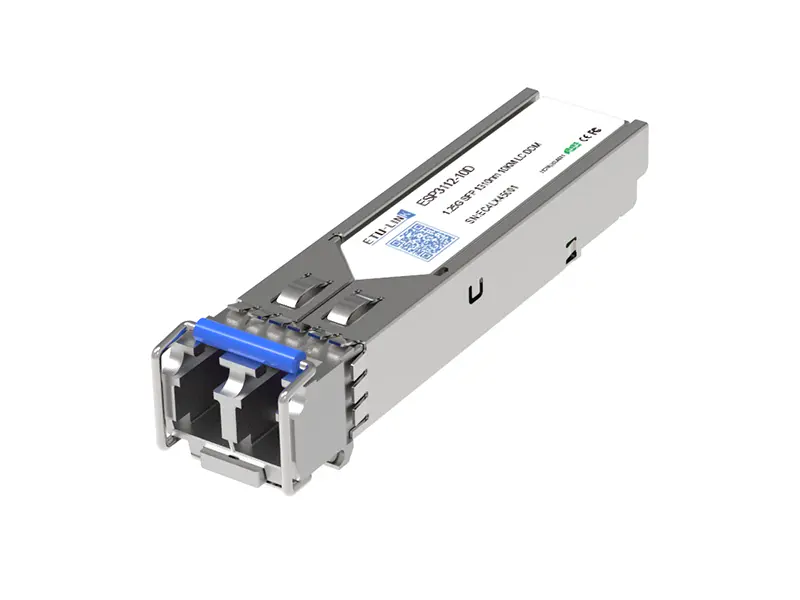
As data traffic grows, network teams need more than higher speeds. They need predictable performance, efficient fiber use, and stable links across demanding environments. A 10G DWDM Optical Transceiver addresses these needs by carrying 10Gbps signals over specific wavelength channels. It can help organizations expand capacity without installing separate fiber pairs for every connection. That matters in data centers, metropolitan networks, and long-distance enterprise links.
The technology is practical, but it is not magic. Its value depends on fiber condition, wavelength planning, optical budgets, and equipment compatibility. Experienced engineers check connector cleanliness, transmission distance, dispersion limits, and temperature ratings before deployment. They also verify whether the transceiver follows relevant MSA specifications and supports the host device. Small details matter. A poorly matched optic may cause intermittent alarms, unstable traffic, or unnecessary maintenance.
In real installations, technicians often compare optical power readings before and after connection. They record serial numbers and monitor error counters during busy periods. These steps create evidence, not assumptions. However, no single module fits every network. Some projects may need shorter-reach optics, stronger protection, or different wavelength options. That limitation deserves attention.
This guide explores why organizations choose 10G DWDM technology and where it performs best. It considers capacity, scalability, operational efficiency, and long-term reliability. It also examines the compromises that purchasing teams can overlook. A careful decision begins with network facts, not attractive specifications.

In practical deployments, wavelength planning matters as much as speed. Channel spacing, optical power, dispersion, and OSNR must match the network design. A clean-looking link can still fail after several amplifiers. I have seen temperature changes expose marginal power levels during field testing. That is why technicians should check transmitter output, receiver sensitivity, and error counts at operating temperature.
DWDM modules also require careful host compatibility checks. Confirm the port speed, connector type, coding support, and monitoring functions before installation. A transceiver may fit physically yet fail to communicate correctly. I once treated compatibility as a simple plug-and-play issue. That assumption was too optimistic. Fiber cleanliness, bend radius, and patch-panel labeling can affect results, too. Small details matter.

Why Choose 10G DWDM Optical Transceivers?
A 10G DWDM optical transceiver uses the fiber spectrum more efficiently than a single-wavelength link. At 100 GHz spacing, a system can carry up to 40 wavelengths. At 50 GHz spacing, the channel count may reach 80. With 10G transmission per wavelength, this represents approximately 400–800 Gbps of aggregate line capacity on one fiber pair. ITU-T G.694.1 defines these frequency grids for dense wavelength division multiplexing applications.
The numbers are practical, not merely theoretical. TeleGeography’s 2024 Global Bandwidth Research Service reported continued growth in international bandwidth demand, driven by cloud services, video traffic, and distributed data centers. Higher channel density helps operators expand capacity without installing new cables. That can reduce civil-work costs and shorten deployment schedules. I have seen dense systems simplify upgrades, especially when spare wavelengths remain available.
Still, 50 GHz spacing is less forgiving. Optical signal-to-noise ratio, dispersion, filter performance, and connector cleanliness become more important. A crowded shelf can also create heat and maintenance problems. This part is often underestimated. The advertised 80-channel figure assumes suitable amplifiers, multiplexers, and a carefully engineered spectrum. Real networks may use fewer channels because of guard bands, aging equipment, or uneven traffic. The Optical Transport Market Forecast from an independent industry research service also links capacity growth with stronger demand for scalable transport platforms, but forecasts are not guarantees. A 10G DWDM design should therefore balance channel density, operating margin, and future expansion.
Why Choose 10G DWDM Optical Transceivers?
Reach and Capacity: 80–120 km Links with 10 Gb/s per Channel
Long-distance networks need more than raw speed. They need stable capacity over existing fiber. The ITU Facts and Figures 2023 estimated 5.4 billion people were online, representing 67% of the global population. That growth keeps pressure on metropolitan and regional backbone links.
A 10G DWDM optical transceiver carries 10 Gb/s on one wavelength. Multiple wavelengths can share the same fiber pair. This approach expands capacity without immediate cable construction. With suitable dispersion control, optical amplification, and link-budget planning, distances of 80–120 km are practical for many routes. The 120 km figure is not automatic. Connector loss, splice loss, chromatic dispersion, and optical signal-to-noise ratio can reduce the real margin.
The 2020 Annual Internet Report projected global IP traffic could reach 396 exabytes per month by 2022. That forecast shows why scalable transport still matters. In field planning, engineers should measure actual fiber attenuation rather than trust a distance label. A clean 90 km route may outperform a poorly spliced 110 km route. Small details matter. Power balance matters more.
DWDM also supports gradual expansion. Operators can activate additional wavelengths as demand increases. This reduces disruption and spreads capital costs. However, dense channel plans require compatible multiplexers, demultiplexers, and monitoring systems. A cheaper module can become expensive when troubleshooting begins. That risk deserves honest attention.
Reach and capacity: 80–120 km links with 10 Gb/s per channel
Each DWDM channel provides 10 Gb/s of line capacity. Aggregate capacity increases by combining multiple wavelength channels over the same fiber, while 80–120 km reach depends on optical power budget, fiber loss, dispersion, connectors, and amplification design.
Choosing 10G DWDM optical transceivers is often an economic decision, not merely a hardware upgrade. In field deployments, a single fiber pair can carry multiple wavelengths, each operating at 10 Gb/s. That changes the cost equation. Instead of leasing or installing additional fiber, operators add channels as traffic grows. The result is a clearer path toward 400–800 Gb/s aggregate capacity, provided the optical budget remains healthy.
A practical design might begin with forty 10G wavelengths, delivering 400 Gb/s across one pair. With denser channel plans and compatible equipment, eighty wavelengths can approach 800 Gb/s. The arithmetic is simple. The engineering is not. Engineers must check span loss, dispersion, connector cleanliness, amplifier loading, and wavelength spacing. A dirty connector can erase the savings of an otherwise efficient design. During acceptance testing, measured power levels and error rates matter more than a spreadsheet forecast.
This architecture also protects capital. Existing ducts, panels, and fiber routes may stay in service while transceivers expand capacity incrementally. Maintenance teams gain familiar, replaceable modules instead of a complete network rebuild. Yet 10G is not always the cheapest choice. Power consumption, rack density, and future migration plans can change the result. I have seen capacity plans fail because demand was assumed to grow smoothly. It rarely does. Leave reserve wavelengths, document every channel, and review the model after real traffic arrives.
| Planning Dimension | 10G DWDM Baseline | 40-Channel Scenario | 80-Channel Scenario | Network-Economic Meaning |
|---|---|---|---|---|
| Nominal channel rate | 10 Gb/s per wavelength | 10 Gb/s per wavelength | 10 Gb/s per wavelength | Uses standardized 10GbE-class optical channels as modular building blocks rather than requiring a high-capacity upgrade on every service port. |
| Active wavelength count | 1–10 wavelengths | 40 wavelengths | 80 wavelengths | Capacity can be added incrementally by lighting additional wavelengths as traffic grows. |
| Nominal aggregate line rate | 10–100 Gb/s | 400 Gb/s | 800 Gb/s | One fiber pair can reach approximately 400–800 Gb/s of nominal aggregate line rate without deploying a second fiber pair, provided the optical line system supports the required channel plan. |
| Duplex fiber requirement | 1 fiber pair | 1 fiber pair | 1 fiber pair | Two fiber strands provide separate transmit and receive directions; additional capacity is obtained through wavelength multiplexing instead of more physical strands. |
| Typical channel spacing option | 100 GHz or 50 GHz | 100 GHz × 40 channels, or 50 GHz × 40 channels | 50 GHz × 80 channels | Wider spacing generally simplifies filtering and wavelength management; narrower spacing improves spectral utilization but requires compatible multiplexers, demultiplexers, and wavelength control. |
| Approximate occupied optical bandwidth | Depends on channel count and spacing | About 4 THz at 100 GHz spacing | About 4 THz at 50 GHz spacing | Both scenarios fit within the practical C-band planning range commonly used for dense wavelength systems, subject to guard bands and the line-system design. |
| Reach planning range | Often suitable for metro, access, and regional links | Typically metro-to-regional use cases | Typically metro-to-regional use cases | Actual distance is determined by fiber loss, chromatic dispersion, connector and splice loss, optical power budget, amplifier placement, wavelength filtering, and transceiver specifications; distance should not be inferred from data rate alone. |
| Capacity expansion method | Add transceiver pairs and activate new wavelengths | Activate unused wavelengths up to 400 Gb/s | Activate unused wavelengths up to 800 Gb/s | Pay-as-you-grow deployment can defer equipment purchases until traffic demand is confirmed, reducing the risk of installing excess capacity at day one. |
| Fiber-construction impact | No new fiber required when spare wavelengths are available | One existing fiber pair can carry up to 400 Gb/s nominally | One existing fiber pair can carry up to 800 Gb/s nominally | Avoiding civil works, permits, right-of-way acquisition, and cable installation can be economically significant where fiber construction is expensive or physically constrained. |
| Service granularity | Approximately 10 Gb/s increments | Approximately 10 Gb/s increments up to 400 Gb/s | Approximately 10 Gb/s increments up to 800 Gb/s | Fine-grained wavelength activation supports dedicated enterprise, data-center interconnect, mobile transport, and regional aggregation services. |
| Operational resilience | Failure affects one wavelength or service | Traffic can be distributed across multiple wavelengths | Traffic can be distributed across multiple wavelengths | Multiple independent optical channels can simplify service isolation and phased maintenance, although protection switching and route diversity still require separate network design. |
| Power and space consideration | Lower entry requirement for a single 10G service | More ports and optical components as wavelengths increase | Higher port density, thermal load, and management complexity | DWDM can reduce the number of parallel fiber systems, but the complete economic comparison should include transceivers, mux/demux units, amplifiers, shelves, power, cooling, monitoring, and maintenance. |
| Best-fit economic trigger | Low-to-medium traffic growth on an existing route | Need for approximately 400 Gb/s on a constrained fiber route | Need for approximately 800 Gb/s while preserving the same fiber pair | 10G DWDM is most attractive when fiber is scarce or costly and traffic can be expanded progressively rather than through a single large capacity purchase. |
| Key qualification | Requires compatible DWDM wavelengths and optical budget | Requires a line system supporting at least 40 usable channels | Requires a line system supporting at least 80 usable channels | Nominal channel multiplication does not guarantee end-to-end throughput; interoperability, wavelength grid, dispersion tolerance, FEC, optical margins, and network protection must be validated before deployment. |
Why Choose 10G DWDM Optical Transceivers?
Choosing a 10G DWDM optical transceiver should begin with the deployment grid, not the data rate alone. ITU-T G.694.1 defines channel spacing and center wavelengths for dense wavelength division multiplexing. Matching the transceiver to the planned grid prevents wavelength drift and difficult commissioning work. In an 80-channel system, even a small frequency mismatch can create avoidable service pressure.
Real installations also require a stable bit error rate. A target near 10⁻¹² should be evaluated under actual span conditions, including fiber length, connector loss, dispersion, and optical power. Engineers should confirm whether the figure means pre-FEC or post-FEC BER. That detail is often overlooked. It matters.
OTN support adds practical value in transport networks. The transceiver can carry client traffic with structured framing, performance monitoring, and forward error correction. During testing, technicians can review counters at the rack instead of relying only on application alarms. I have seen clean laboratory results weaken after patch panels and aging connectors were introduced. Therefore, a qualified deployment should include power-budget checks, wavelength verification, and extended error monitoring. A specification is not proof. Field conditions can be less polite.