Leave Your Message

What Are the Top 10G DWDM 80km SFP Types in 2026?

Choosing the right 10G DWDM 80km SFP is rarely a simple specification exercise. In live networks, engineers compare wavelength stability, optical budget, dispersion tolerance, connector quality, and monitoring features. A module may promise 80 kilometers, yet real performance can change with fiber age, patch-panel loss, temperature, and amplifier settings. Small details matter.

Andrew Schmitt, founder and research director at Cignal AI, has repeatedly stressed the importance of balancing optical performance with network economics. In practical terms, his advice can be expressed clearly: “The best optical solution must fit both the link and the business case.” That principle guides this overview of the top 10G DWDM 80km SFP types in 2026.

The market now includes fixed-wavelength, tunable, cooled, uncooled, and temperature-compensated designs. Some support detailed digital diagnostics. Others focus on simple deployment and lower power consumption. It is not always obvious which type offers the strongest value. That depends on channel spacing, ITU grid requirements, fiber route conditions, and future capacity plans.

This guide examines the main SFP categories used across data centers, metro links, enterprise backbones, and carrier access networks. It considers practical installation issues, not only laboratory figures. We will also question common assumptions. An 80km label is not a guarantee. A cheaper module may create higher maintenance costs later. A premium transceiver may be unnecessary on a stable route. Careful selection remains essential.

What Are the Top 10G DWDM 80km SFP Types in 2026?

What Is a 10G DWDM 80km SFP Transceiver?

What Is a 10G DWDM 80km SFP Transceiver?

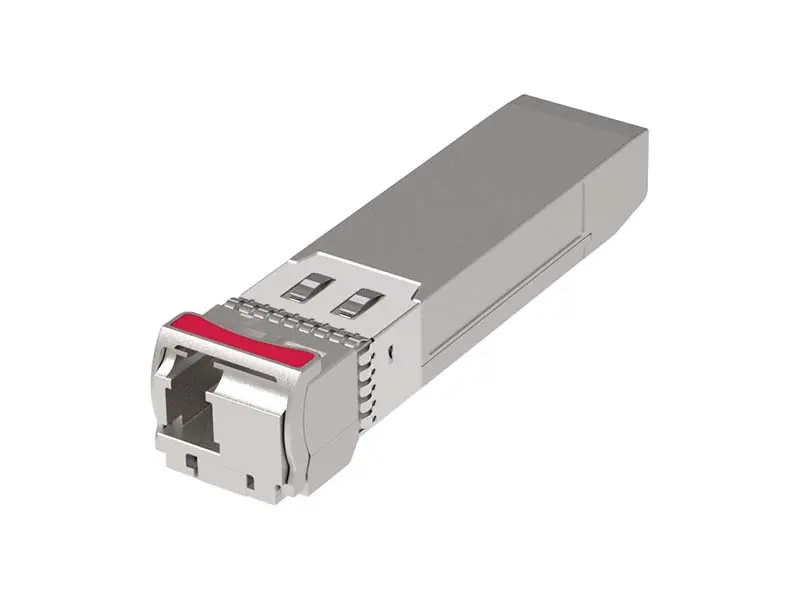
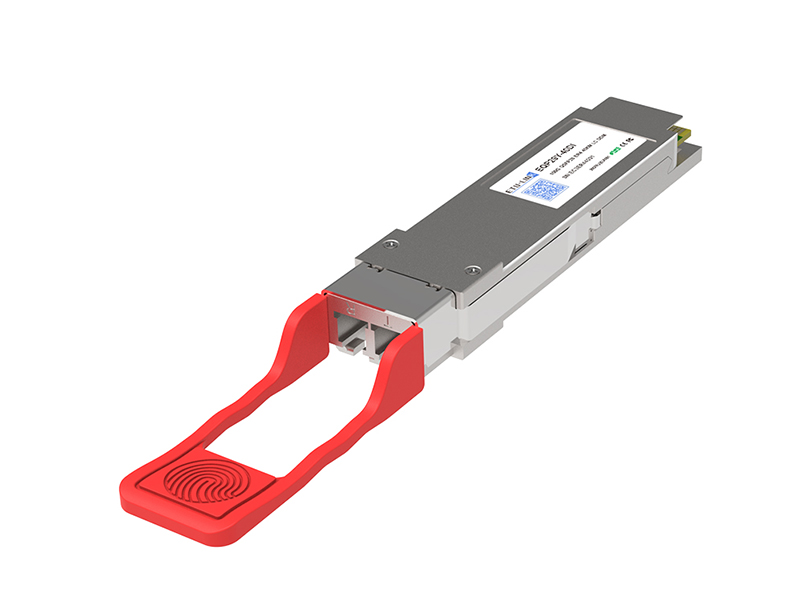
A 10G DWDM 80km SFP transceiver is a compact optical module for transmitting 10Gbps signals across dense wavelength-division multiplexing networks. It commonly uses the C-band and narrow channel spacing defined by ITU-T G.694.1. “80km” describes the rated reach, not a guaranteed field distance. Fiber loss, connector quality, dispersion, and amplifier settings can change the result.

The module normally combines a temperature-controlled laser, wavelength-specific optics, and a receiver designed for long-distance links. Some versions use PIN detection, while higher-margin designs may use APD receivers. Fixed-wavelength types remain practical for stable routes. Tunable types can reduce spare inventory and simplify wavelength planning, but they cost more and require stronger operational discipline. Small details matter, especially optical power and receiver sensitivity.

Cisco’s Annual Internet Report projected 29.3 billion networked devices by 2023, showing why metro and regional capacity continues to expand. Optical transport studies from Dell’Oro Group also identify coherent and wavelength-based upgrades as major network investment areas. These reports do not prove that every 80km link needs DWDM. That assumption is easy to make, and sometimes wrong. In real deployment, engineers should verify the fiber budget, channel plan, FEC support, temperature range, and interoperability before selecting a 2026 model. Always check the datasheet. Testing beats optimism.


How Do 10G DWDM 80km SFP Types Differ?

10G DWDM 80km SFP types differ mainly in wavelength control, transmission stability, and network compatibility. Fixed-wavelength modules use one assigned channel, making deployment simple and predictable. Tunable modules can switch across multiple DWDM channels, which helps during network expansion or emergency replacement. However, they usually require careful configuration and stronger management support.

Temperature ratings also separate these optical types. Commercial units suit controlled data rooms, while industrial-temperature versions handle roadside cabinets and wider thermal changes. Some modules include digital optical monitoring, reporting power, temperature, voltage, and laser bias. Others provide fewer diagnostics, which can slow fault analysis. Duplex LC interfaces are common, but host equipment compatibility still matters. A module may support 80km on paper, yet fiber loss, connector quality, and dispersion can reduce its practical reach. That detail is easy to overlook.

Tips: Check the exact DWDM channel, wavelength tolerance, receiver sensitivity, and host coding requirements before purchasing. Confirm whether the network uses amplification or dispersion compensation. For stable operation, keep connector end faces clean and record optical readings during installation. Fixed optics are often better for stable links. Tunable optics are more flexible, but flexibility can add configuration mistakes. No type is universally best; real field conditions should decide. One assumption may fail.

What Are the Top 10G DWDM 80km SFP Types in 2026? - How Do 10G DWDM 80km SFP Types Differ?

Rank 10G DWDM 80km SFP Type Typical Wavelength or Channel Range DWDM Grid Laser and Receiver Configuration Operating Temperature Typical Optical Output Typical Receiver Sensitivity Main Difference Common Use Case
1 Fixed-Wavelength C-Band 100 GHz SFP+ Approximately 1528.77–1563.86 nm 100 GHz Cooled EML transmitter with APD receiver Commercial: 0 to 70°C About 0 to +4 dBm About −24 to −26 dBm Uses one factory-set ITU channel and provides a relatively wide channel spacing for simpler planning and filtering. Point-to-point metro and regional links with a fixed optical wavelength.
2 Fixed-Wavelength C-Band 50 GHz SFP+ Approximately 1528.77–1563.86 nm 50 GHz Cooled EML transmitter with APD receiver Commercial: 0 to 70°C About 0 to +4 dBm About −24 to −26 dBm Supports closer channel placement than a 100 GHz version, allowing more wavelengths within the C-band. Higher-capacity DWDM systems where spectrum efficiency is important.
3 Tunable C-Band 50 GHz SFP+ Multiple selectable C-band ITU channels 50 GHz Tunable laser with APD receiver Commercial: 0 to 70°C About 0 to +4 dBm About −24 to −26 dBm One module can be configured for different channels, reducing the need to stock many fixed-wavelength variants. Reconfigurable optical add/drop networks and spares management.
4 Tunable C-Band 100 GHz SFP+ Multiple selectable C-band ITU channels 100 GHz Tunable laser with APD receiver Commercial: 0 to 70°C About 0 to +4 dBm About −24 to −26 dBm Offers software-selectable wavelengths while retaining the wider spacing and simpler filtering of a 100 GHz grid. Flexible point-to-point networks with moderate channel density.
5 Extended-Temperature Fixed DWDM SFP+ One fixed C-band ITU channel 50 or 100 GHz Cooled EML transmitter with APD receiver Extended: −20 to 85°C About 0 to +4 dBm About −24 to −26 dBm Uses components and thermal control designed for a wider temperature range than standard commercial modules. Outdoor cabinets, roadside enclosures, and industrial access sites.
6 Industrial-Temperature Tunable DWDM SFP+ Multiple selectable C-band ITU channels 50 or 100 GHz Tunable laser with APD receiver Industrial: −40 to 85°C About 0 to +4 dBm About −24 to −26 dBm Combines wavelength flexibility with operation across severe temperature variations. Uncontrolled network locations and industrial transport systems.
7 High-Power Fixed DWDM SFP+ One fixed C-band ITU channel 50 or 100 GHz High-output cooled EML transmitter with APD receiver Commercial: 0 to 70°C About +3 to +6 dBm About −24 to −26 dBm Provides additional launch power for passive losses, connectors, ROADMs, and other optical elements. Longer span engineering within an approximately 80 km design target.
8 Low-Power Fixed DWDM SFP+ One fixed C-band ITU channel 50 or 100 GHz Low-power cooled EML transmitter with APD receiver Commercial: 0 to 70°C About −2 to +2 dBm About −24 to −26 dBm Uses less launch power, helping control nonlinear effects and optical power levels in shorter or lightly loaded spans. Links with low insertion loss and systems using external amplification or power balancing.
9 Enhanced-Diagnostics DWDM SFP+ One fixed or selectable C-band channel 50 or 100 GHz EML or tunable laser with APD receiver and digital monitoring Commercial or extended temperature About 0 to +4 dBm About −24 to −26 dBm Provides digital diagnostic monitoring for temperature, voltage, bias current, transmit power, and receive power. Managed networks requiring predictive maintenance and remote troubleshooting.
10 Low-Power-Consumption DWDM SFP+ One fixed or selectable C-band channel 50 or 100 GHz Energy-optimized EML or tunable laser with APD receiver Commercial: 0 to 70°C About 0 to +4 dBm About −24 to −26 dBm Optimizes electrical power consumption and thermal load while maintaining the optical budget required for the target span. High-density switches, data-center interconnects, and power-constrained platforms.

Representative industry values are shown for comparison. Actual 80 km performance depends on fiber attenuation, chromatic dispersion, connector and splice losses, DWDM filter or ROADM losses, optical power limits, receiver margin, and system-level amplification or dispersion management. 10G DWDM SFP+ modules commonly use duplex LC connectors and digital diagnostic monitoring, but host-device compatibility and channel plans should be verified before deployment.

Which Wavelength Options Are Available for 10G DWDM SFPs?

For 10G DWDM SFPs reaching 80 kilometers, wavelength selection usually follows the ITU-T C-band grid. ITU-T G.694.1 specifies 100 GHz and 50 GHz channel spacing, centered near 193.1 THz. In practice, this corresponds to wavelengths from approximately 1528.77 to 1563.86 nanometers. Common fixed channels include 1530.33, 1531.12, 1532.68, and 1546.12 nanometers. Exact availability depends on the transceiver supplier and network plan.

The 50 GHz grid offers more channels within the same optical band. However, it demands tighter wavelength control and cleaner multiplexing. The 100 GHz grid is easier to deploy and often provides better spacing tolerance. ITU-T G.698.1 also defines multichannel DWDM interface requirements for direct optical connections. That matters when several 10G signals share one fiber pair. A field test should verify insertion loss, chromatic dispersion, and receiver power.

I have seen engineers choose wavelength numbers before checking the multiplexer. That approach fails surprisingly often. A channel labeled “C-band” is not automatically compatible. Optical filters may support only selected frequencies, especially in older 40-channel systems. Industry optical market analyses from Omdia and LightCounting continue to show strong demand for pluggable optics, but higher demand does not remove compatibility risks. The imperfect part is simple: an 80km rating describes reach, not guaranteed performance on every fiber route.

How Should You Choose a 10G DWDM 80km SFP?

Choosing a 10G DWDM 80km SFP starts with the optical path, not the product label. Measure fiber loss, connector loss, splice loss, and engineering margin. A nominal 80km rating can fail on an older route with excessive attenuation. I have seen links pass laboratory tests but become unstable after patch-panel changes.

Match the module to the correct ITU DWDM channel. Fixed-wavelength SFPs suit stable point-to-point links and usually simplify deployment. Tunable versions offer better flexibility when channels may change, but they require compatible equipment and stricter configuration control. Check whether the design uses 100GHz, 50GHz, or another grid spacing. The channel must align at both ends.

Look closely at transmitter power, receiver sensitivity, dispersion tolerance, and forward error correction support. For long 10G links, cooled transmitters can provide steadier wavelength performance across temperature changes. Digital optical monitoring is valuable for checking bias current, temperature, transmit power, and received power. It turns a vague fault into measurable evidence. Also verify SFP coding, host compatibility, duplex LC connectors, and operating temperature. A lower-cost optic is not automatically practical. Sometimes it saves money upfront and creates troubleshooting work later. I would also request test data, not only a distance claim. Conditions vary.񟿿

What Network Factors Affect 10G DWDM SFP Compatibility?

What Are the Top 10G DWDM 80km SFP Types in 2026?

For 80km links, the common 10G DWDM SFP types include fixed-channel modules, extended-temperature modules, and tunable versions. Fixed-channel units suit stable point-to-point connections with planned wavelengths. Tunable modules offer flexibility when channels change during network expansion. Extended-temperature options support roadside cabinets, industrial rooms, and poorly cooled sites. The optical type matters, but compatibility depends on more than distance.

What Network Factors Affect 10G DWDM SFP Compatibility?

The wavelength must match the assigned DWDM channel precisely. A small channel mistake can create costly troubleshooting. Channel spacing, typically based on an established grid, must match the multiplexer and demultiplexer. Engineers also check transmit power, receiver sensitivity, and total optical loss across 80km. Splices, patch panels, connectors, and bends can reduce the real power budget.

Fiber quality is equally important. Chromatic dispersion and nonlinear effects may limit performance before the advertised distance. The host switch must support 10G SFP+ signaling, electrical coding, and required monitoring functions. Check connector polish and fiber mode as well. Single-mode fiber is normally required. Temperature range, laser safety controls, and digital diagnostic monitoring also affect deployment reliability. Field measurements often reveal issues that specifications miss. A link may pass a basic test, yet fail during temperature changes or channel loading. This is where careful validation matters.