China Best 40G QSFP+ Active Optical Cable Advantages and Applications?
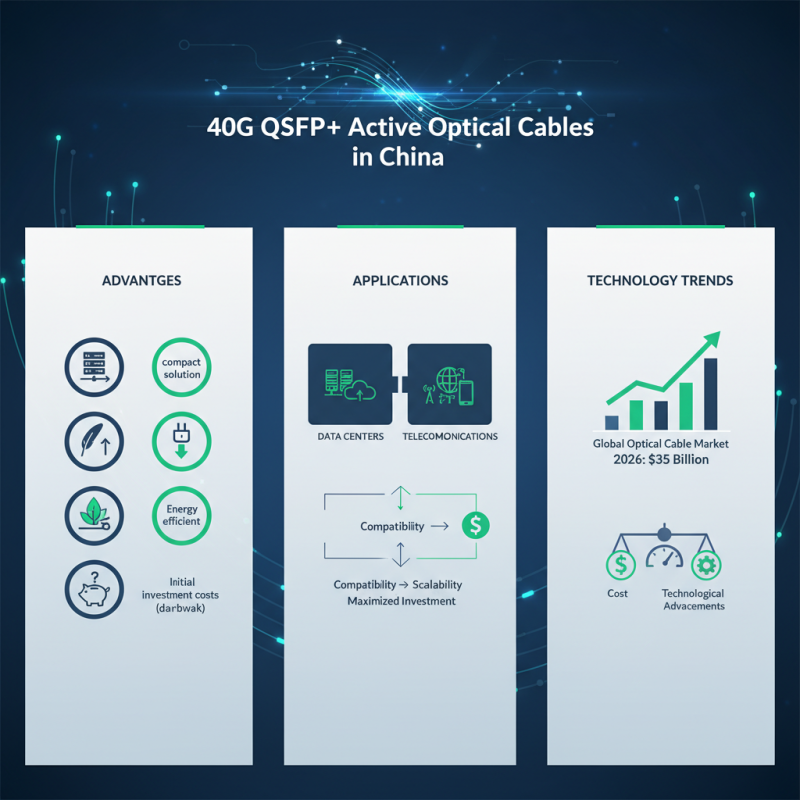
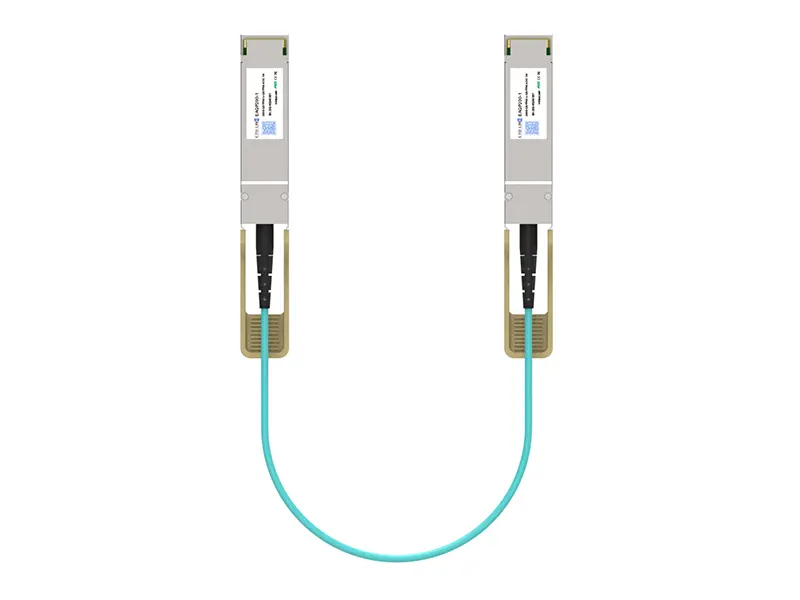
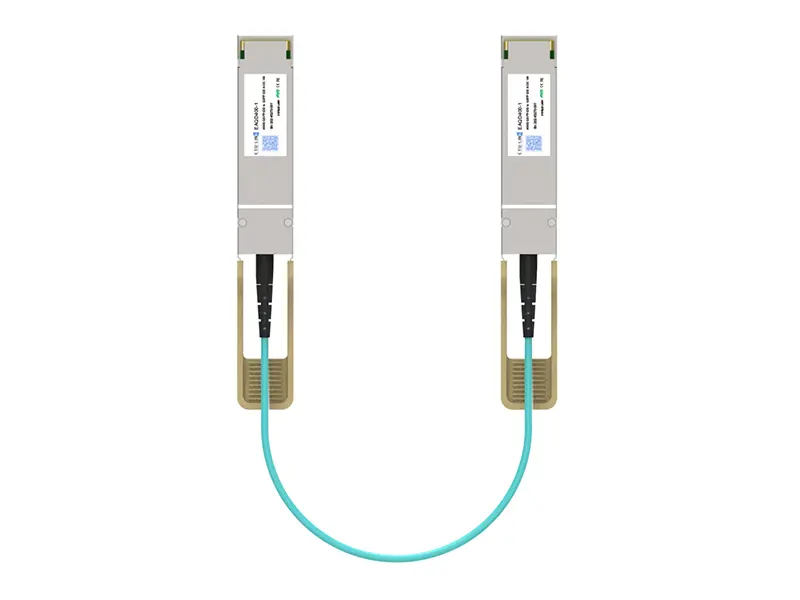
In the evolving field of data transmission, the 40G QSFP+ Active Optical Cable stands out as a crucial innovation. This technology enables high-speed data communication, essential for modern data centers. According to a recent report by MarketsandMarkets, the global optical cable market is projected to reach $35 billion by 2026. This growth reflects the increasing demand for faster and more reliable connections.
The advantages of the 40G QSFP+ Active Optical Cable are numerous. It provides a compact solution, reducing space requirements in networking environments. Its lightweight design minimizes installation challenges, making it ideal for high-density applications. Additionally, these cables are energy efficient, which is vital for reducing operational costs. However, one must also consider potential drawbacks, such as the initial investment costs.
With applications spanning from data centers to telecommunications, the 40G QSFP+ Active Optical Cable plays an integral role in enhancing network performance. Yet, it is crucial to evaluate each use case. Assessing compatibility and future scalability can help organizations maximize their investments. Balancing cost, performance, and technological advancements remains key to leveraging this transformative technology effectively.
Advantages of 40G QSFP+ Active Optical Cables in High-Speed Networking
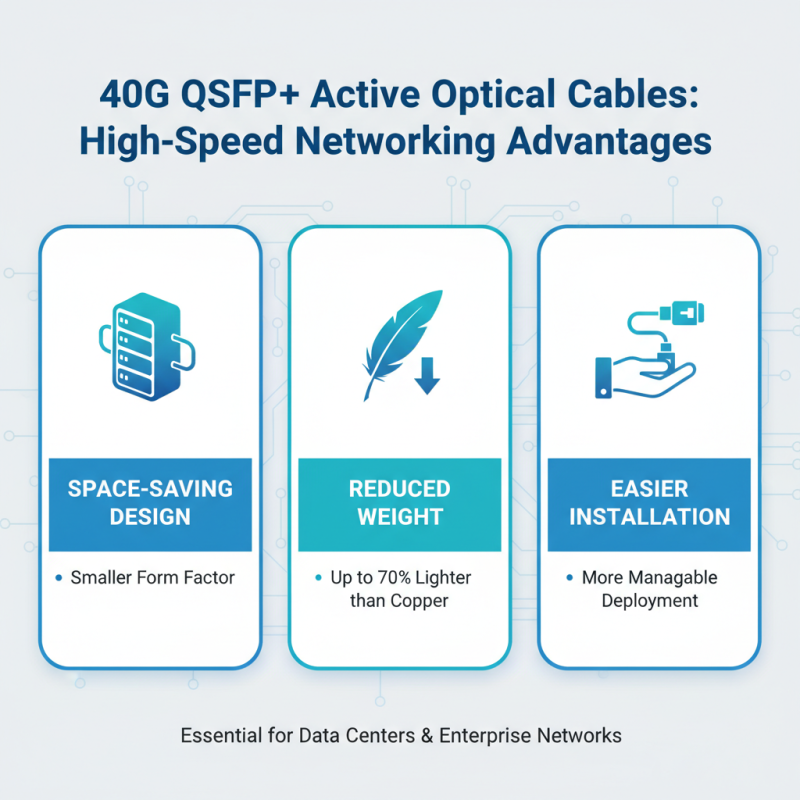
The demand for high-speed networking has surged in recent years. In this context, 40G QSFP+ Active Optical Cables (AOCs) stand out as vital components. They offer notable advantages in data centers and enterprise networks. AOCs have a smaller form factor. This is crucial for reducing space in equipment racks. With a weight reduction of up to 70% compared to traditional copper cables, installation becomes more manageable.
Performance metrics reveal that these cables support transmission distances up to 100 meters. This makes them ideal for short-range connections in dense environments. Furthermore, they provide lower power consumption. According to industry reports, AOCs use 30% less energy than comparable copper alternatives. This decrease not only aids in cost savings but also contributes to sustainability efforts.
Despite these advantages, challenges exist. Compatibility with existing infrastructure can sometimes pose issues. Additionally, while AOCs excel in certain environments, their cost can be a barrier for smaller operations. End-users must carefully assess their networking needs. This introspection is essential in choosing the right technology. Balancing performance and cost is key in a high-speed networking landscape.
Key Applications of 40G QSFP+ Active Optical Cables in Data Centers
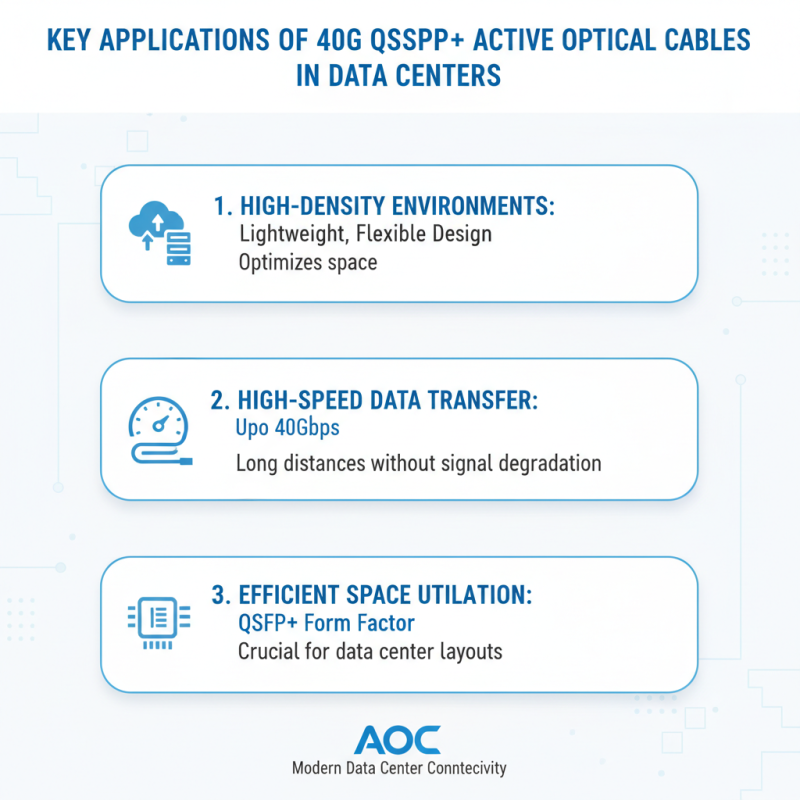
In modern data centers, 40G QSFP+ Active Optical Cables (AOCs) are gaining popularity. Their lightweight and flexible design makes them ideal for high-density environments. These cables support high-speed data transfer over long distances without signal degradation. The form factor of QSFP+ allows for efficient use of space, crucial in optimizing data center layouts.
One of the key applications of 40G AOCs is in high-performance computing. These cables facilitate faster data processing and reduce latency. They connect servers, switches, and storage systems seamlessly. Additionally, they play a pivotal role in interconnecting racks within a data center. This interconnectivity enhances overall network performance and efficiency, a must-have for large-scale operations.
However, while 40G AOCs offer many advantages, they are not without challenges. The initial cost may be higher compared to traditional copper cables. There are concerns over compatibility with existing equipment. Ensuring proper installation is critical to avoid potential data loss. As data centers evolve, there is room for reflection on improving these technologies while addressing their limitations effectively.
Comparison of 40G QSFP+ Active Optical Cables and Copper Cables
40G QSFP+ Active Optical Cables (AOCs) provide a vital advantage in high-speed data transmission. They utilize optical fibers to transmit signals over long distances. In contrast, copper cables face limitations due to signal degradation and distance constraints. AOCs maintain signal integrity, even across several hundred meters, making them suitable for data centers and large networks.
When comparing AOCs to copper cables, one must consider bandwidth. AOCs support higher bandwidth, which is essential for applications requiring fast data transfer rates. However, copper cables are typically cheaper and easier to install. They may suffice for short distances in less demanding environments. Still, as data demands grow, the inherent benefits of AOCs become more apparent.
It's crucial to reflect on the installation and maintenance aspects. AOCs are generally lighter and more flexible than copper cables. However, they can be more fragile. Ones with poor handling may experience damage. Optimizing network performance and minimizing downtime require thoughtful implementation. One must weigh the pros and cons carefully.
Advantages of 40G QSFP+ Active Optical Cables vs Copper Cables
Design and Technology Behind 40G QSFP+ Active Optical Cables
40G QSFP+ Active Optical Cables (AOCs) represent a significant advancement in high-speed data communication. These cables leverage advanced technology to achieve remarkable performance. AOCs use optics to transmit data over long distances while maintaining low power consumption.
Industry reports indicate that they can achieve distances of up to 300 meters over multimode fiber, which is crucial for data centers and high-performance computing.
The design of 40G QSFP+ AOCs is centered around minimizing signal degradation. They utilize high-quality optical fibers and integrated transceivers. This technology allows for higher bandwidth and better signal integrity. According to market analyses, the demand for AOCs is projected to increase by over 12% annually through 2026. However, while their performance is impressive, they can sometimes be more sensitive to bends and environmental factors compared to traditional cabling.
In applications like data centers, AOCs are favored for their lightweight and flexible nature. They simplify cable management and significantly reduce clutter. Nevertheless, potential issues arise when considering installation environments. For instance, improper handling may lead to increased attenuation and a decrease in performance. Users must ensure proper installation guidelines are followed to maximize their effectiveness.
Future Trends and Innovations in 40G Optical Cable Solutions
The future of 40G Optical Cable solutions is bright, with innovations emerging regularly. According to a recent industry report, the global optical fiber market is expected to exceed USD 8 billion by 2025. This growth is fueled by an increased demand for high-speed data transmission. Active Optical Cables (AOCs), particularly 40G QSFP+ AOCs, are at the forefront. They provide a cost-effective solution for data centers looking to enhance bandwidth while maintaining space efficiency.
One noticeable trend is the integration of advanced materials in cable manufacturing. These materials improve performance and reduce energy consumption. A recent analysis indicated that using composite materials could cut energy costs by approximately 15%. Furthermore, the ongoing development of custom cable lengths and configurations caters to specific data center needs, enhancing data transmission efficiency. Despite these advancements, challenges persist in compatibility and standardization issues across different platforms.
Market players are exploring intelligent connectivity solutions. These aim to optimize network performance. Yet, integration remains complex. For instance, managing diverse hardware systems can lead to operational inefficiencies. As the industry progresses, continuous assessment of these factors will be crucial. Keeping pace with innovation is important, but aligning it with user needs presents ongoing dilemmas.
China Best 40G QSFP+ Active Optical Cable Advantages and Applications
| Feature |
Description |
Application Areas |
| High Bandwidth |
Supports data rates up to 40 Gbps for high-performance networking. |
Data Centers, Cloud Computing |
| Low Power Consumption |
Operates at lower power than traditional copper cables, reducing operational costs. |
Telecommunications, Server Farms |
| Lightweight and Flexible |
Easier to install and manage due to reduced weight and increased flexibility. |
Network Infrastructure, Office Deployments |
| Enhanced Distance |
Capable of transmitting data over longer distances compared to copper cables. |
Large Enterprise Networks, Campus Environments |
| Compatibility |
Compatible with existing 40G network equipment for easy upgrades. |
Upgrading Legacy Systems, Hybrid Networks |

 400G
400G 200G
200G 100G
100G 40G
40G 25G
25G 10G
10G 1G
1G COPPER-T
 Other
Other 10G SFP+ DAC
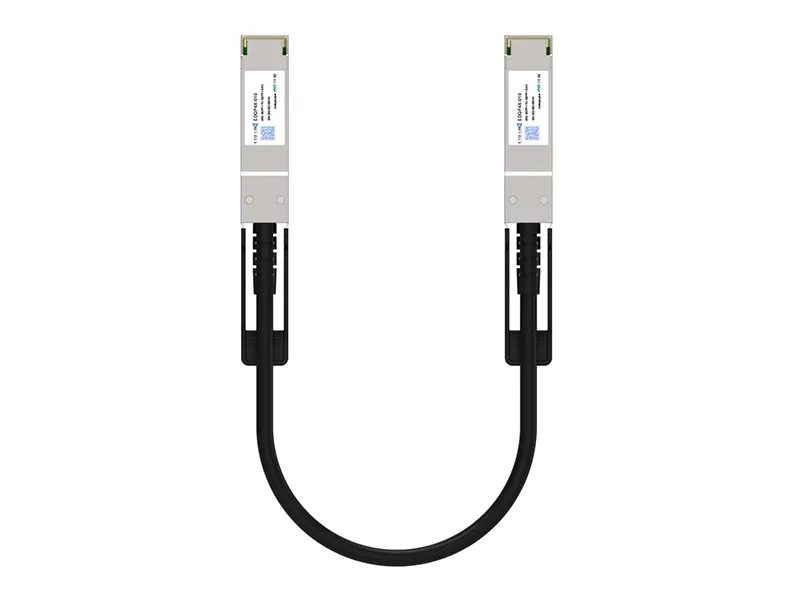 40G QSFP+ DAC
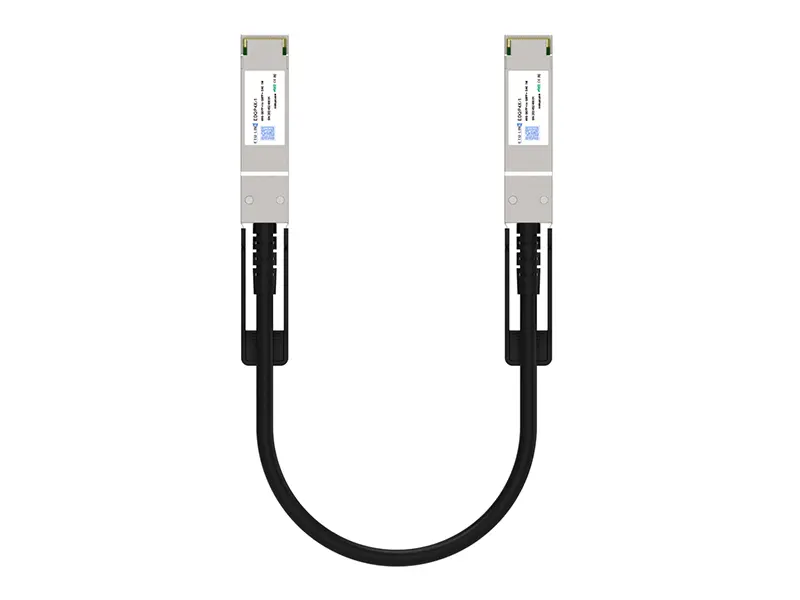 56G QSFP+ DAC
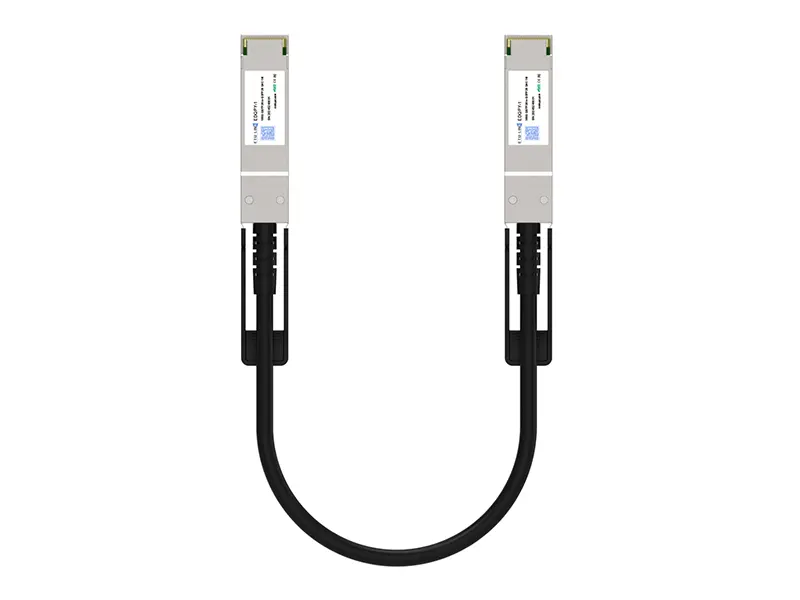 100G QSFP28 DAC
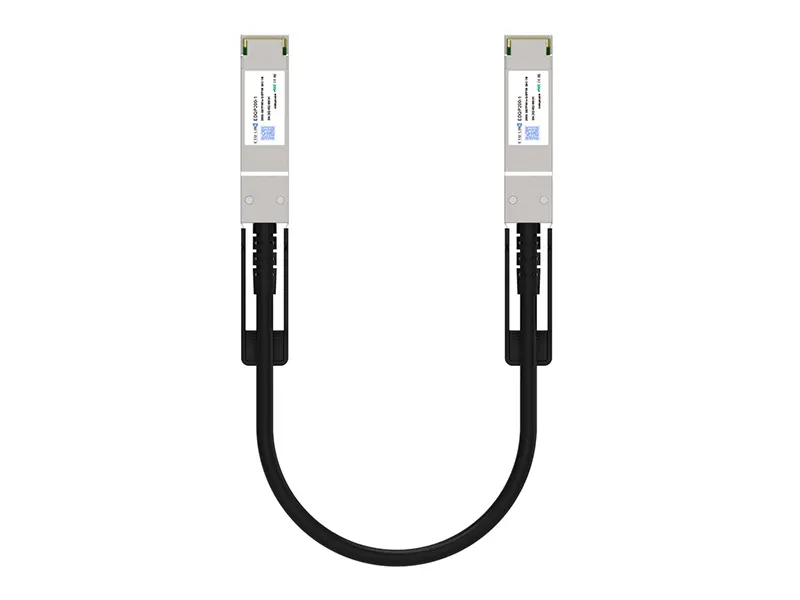 200G QSFP56 DD DAC
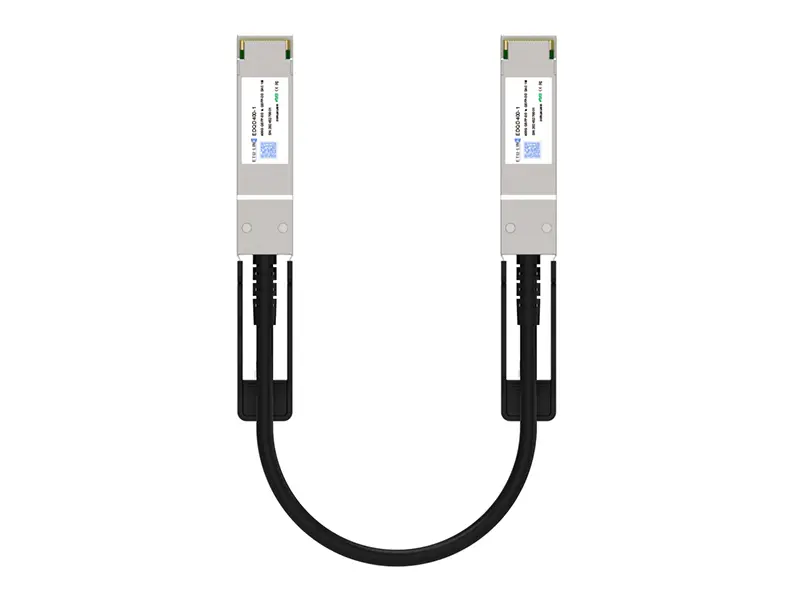 400G QSFP DD DAC
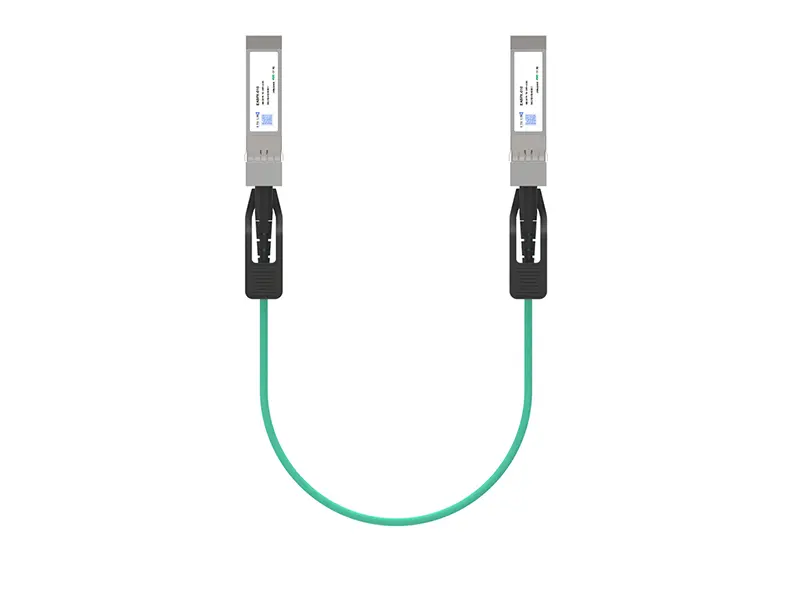 10G SFP+ AOC
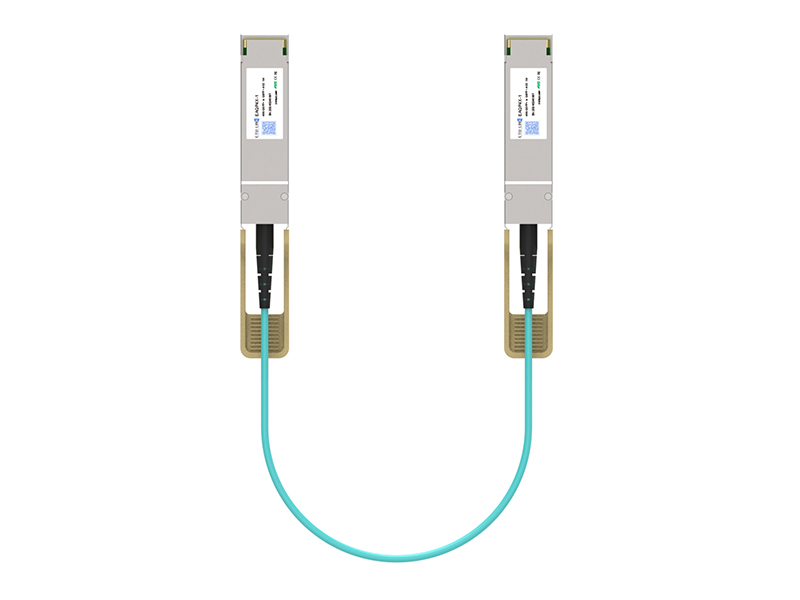 40G QSFP+ AOC
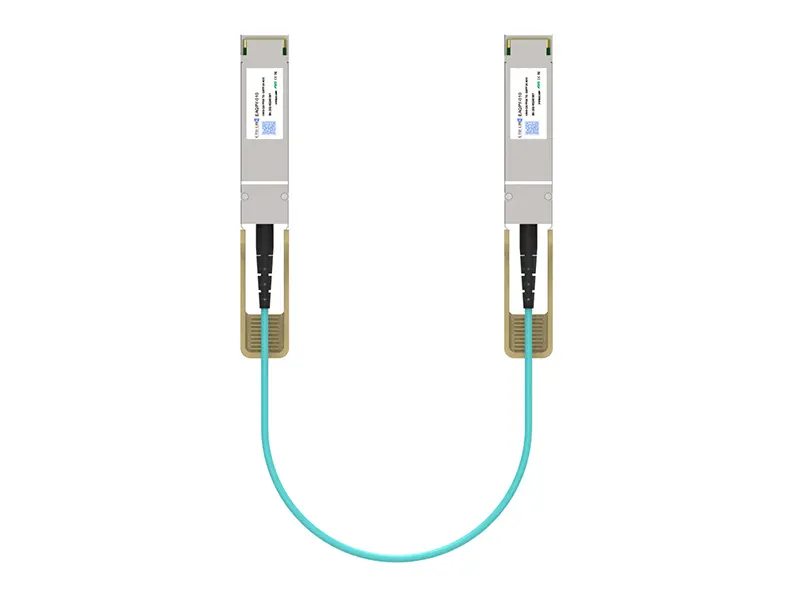 100G QSFP28 AOC
 200G QSFP56 AOC
 400G QSFP-DD AOC
 Adapter Details
 Media Converter