What is 100G QSFP28 Active Optical Cable and its Uses?
In the ever-evolving landscape of data communication, the importance of high-speed connections cannot be overstated. The 100G QSFP28 Active Optical Cable emerges as a key player in this arena. Dr. Emily Chen, a leading expert in optical networking, states, "The 100G QSFP28 Active Optical Cable is a game changer, driving faster and more reliable connections."
These cables are designed for high bandwidth applications. They offer a reliable solution for data centers and networking environments. The 100G QSFP28 Active Optical Cable is lightweight and flexible, making installation simpler. However, awareness of compatibility issues is crucial. Not all systems may support this advanced technology, which can lead to frustrations.
The drive for greater efficiency continues. As we push for faster data transfer rates, the demands on infrastructure increase. The 100G QSFP28 Active Optical Cable symbolizes progress, yet challenges remain. Reflecting on these advancements is vital. Striking a balance between speed and reliability will define the future of networking.

What is 100G QSFP28 Active Optical Cable?
The 100G QSFP28 Active Optical Cable (AOC) is a high-speed connectivity solution. It is designed for data centers and high-performance computing environments. This cable supports 100 Gigabit Ethernet and Infiniband connections over long distances. The form factor is compact, helping to save space in racks and cabinets.
Unlike traditional copper cables, the QSFP28 AOC leverages optical fibers. These fibers allow for higher bandwidth and reduced latency. Its lightweight design makes installation easier and more flexible. Users often appreciate how quickly data can be transmitted. However, the cost can sometimes be a concern. Some may wonder if the investment is worth it for all applications.
In practical terms, the 100G QSFP28 AOC is ideal for connecting switches, servers, and storage devices. It is beneficial in environments with dense setups. Yet, users need to evaluate their specific needs. For some, simpler solutions may suffice. Finding the right balance between performance and cost can be challenging.
Key Features of 100G QSFP28 Active Optical Cable
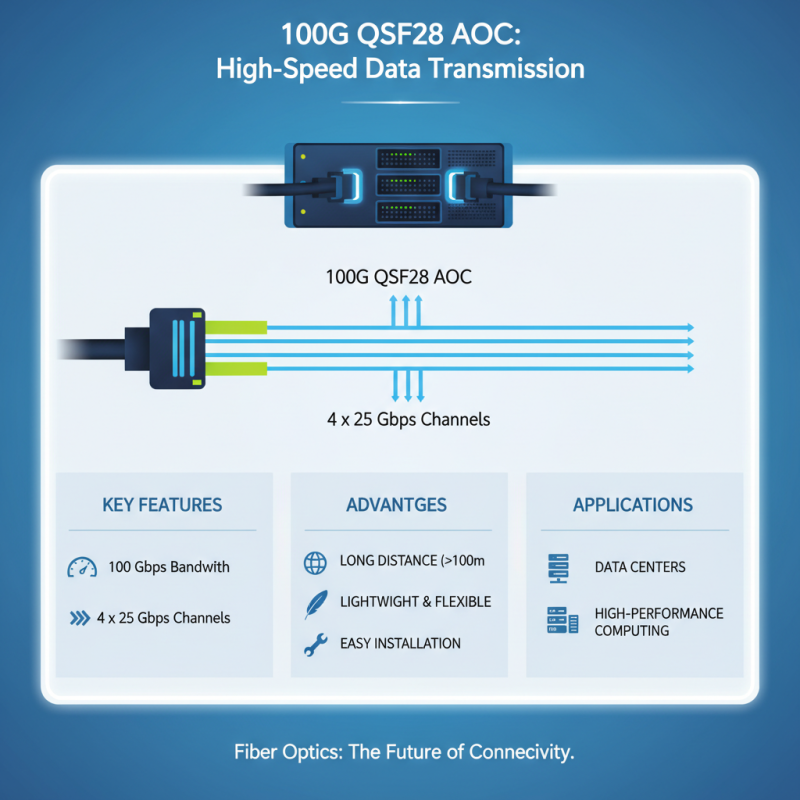
The 100G QSFP28 Active Optical Cable (AOC) is a vital component in high-speed data transmission. It features four channels, each capable of transmitting data at 25 Gbps. This totals a bandwidth of 100 Gbps. Such cables offer significant advantages over traditional copper cables. They deliver better performance over long distances, often exceeding 100 meters. With a lightweight design, they simplify installation in dense settings.
Tip: When choosing optical cables, consider the distance and environment. Active cables are suitable for longer runs, while passive options work well for shorter distances.
Another key feature of the 100G QSFP28 AOC is its low power consumption. This makes it an eco-friendly option for data centers. Many users appreciate the reduced heat output. The cable is also rugged and reliable, ensuring stable connections. These attributes contribute to its wide adoption in various data-intensive applications.
Tip: Monitor your cable connections regularly. Though they are durable, wear and tear can still affect performance. Regular checks help maintain optimal data flow.
Technical Specifications of 100G QSFP28 Cables
100G QSFP28 Active Optical Cables (AOCs) are critical in modern data centers and high-speed networking applications. These cables offer a high bandwidth of up to 100 Gbps. They use multi-mode fibers and come with an integrated transceiver, simplifying connections. AOCs are typically used over short distances, ranging from 1 to 100 meters. The use of AOCs can reduce power consumption significantly. Reports indicate a potential reduction of 75% in power usage compared to traditional copper cables.
The technical specifications of 100G QSFP28 cables provide insight into their efficiency. The data rate is 100 Gbps across 4 channels, each supporting 25 Gbps. The operating temperature range spans from 0°C to 70°C. This flexibility enables deployment in various environments, enhancing their usability. Further, their low latency is a significant advantage in applications requiring real-time data processing. Industry studies suggest that the deployment of these cables can lead to improved network reliability. However, the cost of AOCs versus other solutions remains a topic of discussion. Some users feel that the initial investment may not justify the benefits for smaller setups.
High-density applications have embraced the 100G QSFP28 due to its compact design. The form factor allows for efficient use of space, reducing cabling clutter. While they excel in specific scenarios, one should assess their applicability based on individual requirements. Not every environment might fully utilize their capabilities. Thus, careful evaluation is necessary before making a decision.
What is 100G QSFP28 Active Optical Cable and its Uses? - Technical Specifications of 100G QSFP28 Cables
| Parameter |
Description |
| Connector Type |
QSFP28 |
| Cable Type |
Active Optical Cable |
| Bandwidth |
100 Gbps |
| Transmission Distance |
Up to 100 meters |
| Wavelength |
850 nm |
| Application |
Data Center, High-Performance Computing |
| Power Consumption |
Less than 1.5 W |
| Compatibility |
Compatible with standard QSFP28 ports |
Applications of 100G QSFP28 Active Optical Cables in Data Centers
The 100G QSFP28 Active Optical Cable is revolutionizing data centers. Its high bandwidth efficiently supports dense server environments. These cables can transmit data up to 100 meters with minimal signal loss. This makes them ideal for large-scale data transmission in modern infrastructures. Many data centers are now incorporating these cables for optimal performance.
Data centers rely on speed and low latency. A report by the International Data Corporation suggests that using 100G technology can enhance data transfer speeds by up to 400%. This improvement leads to better cloud computing services. Furthermore, these cables are cost-effective compared to traditional copper alternatives. In fact, they can reduce power consumption by as much as 30%, an attractive figure in the age of rising energy costs.
**Tip:** Ensure proper installation of these cables. Misalignment can lead to performance issues. Regularly check for wear and tear to maintain efficiency. Optimize your layout by strategically placing servers and switches. This will enhance airflow and reduce overheating risks. Keep questioning your current setup to find potential areas for improvement.
Data Center Application of 100G QSFP28 Active Optical Cables
This chart illustrates the percentage distribution of applications for 100G QSFP28 Active Optical Cables in data centers, highlighting their significance in various areas.
Advantages of Using 100G QSFP28 Over Traditional Copper Cables
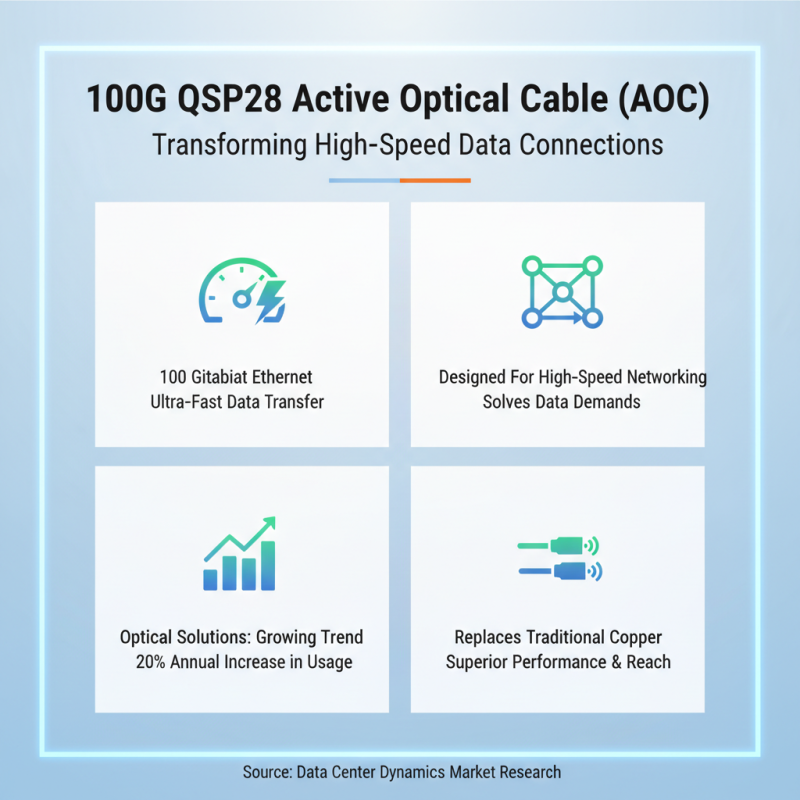
The 100G QSFP28 Active Optical Cable (AOC) is transforming high-speed data connections. It is designed for 100 Gigabit Ethernet applications. Many organizations face increasing data demands. Traditional copper cables often struggle with these needs. According to a market research report by Data Center Dynamics, optical solutions represent a growing trend in high-speed networking. They project a 20% year-on-year increase in AOC usage.
One significant advantage of using 100G QSFP28 AOCs is performance. They deliver lower latency compared to copper cables. AOCs can transmit data up to 100 meters, while copper cables often fall short beyond 25 meters. This extended range is crucial for data centers, which need reliable connections over longer distances. Additionally, AOCs consume less power, reducing operational costs.
Despite these benefits, some challenges remain. AOCs are generally more expensive upfront than copper alternatives. Some users also question their durability in harsh environments. The trade-off between cost and performance is a topic for ongoing discussion in the industry. There is also a need for proper installation techniques to maximize the lifespan of these cables. As technology evolves, the balance between these factors will determine the future of networking solutions.

 400G
400G 200G
200G 100G
100G 40G
40G 25G
25G 10G
10G 1G
1G COPPER-T
 Other
Other 10G SFP+ DAC
 40G QSFP+ DAC
 56G QSFP+ DAC
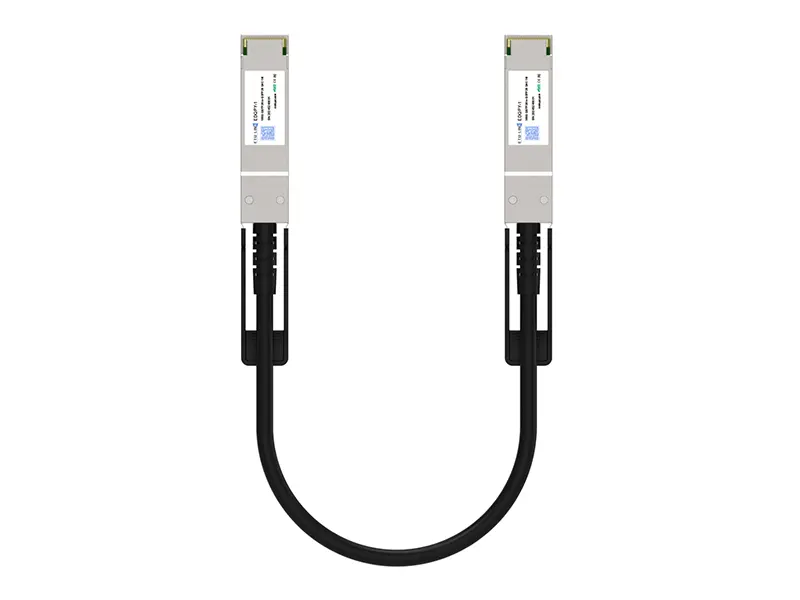 100G QSFP28 DAC
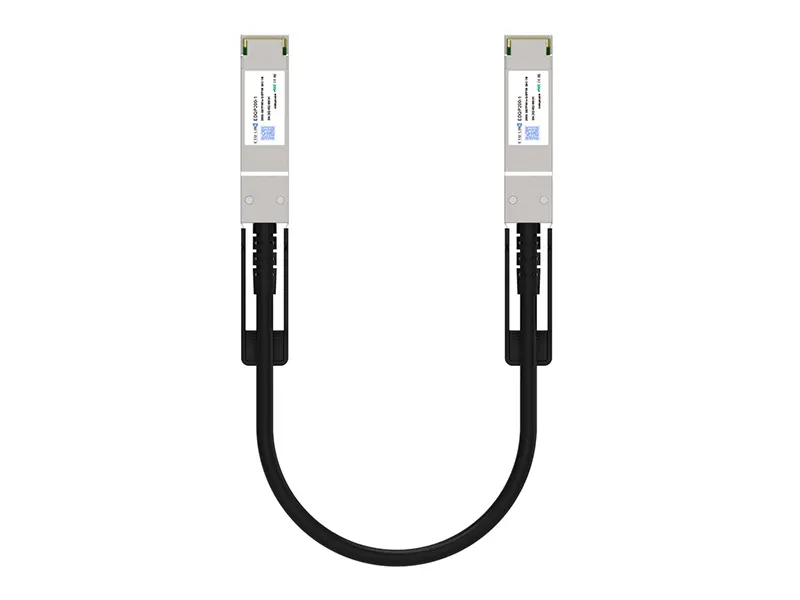 200G QSFP56 DD DAC
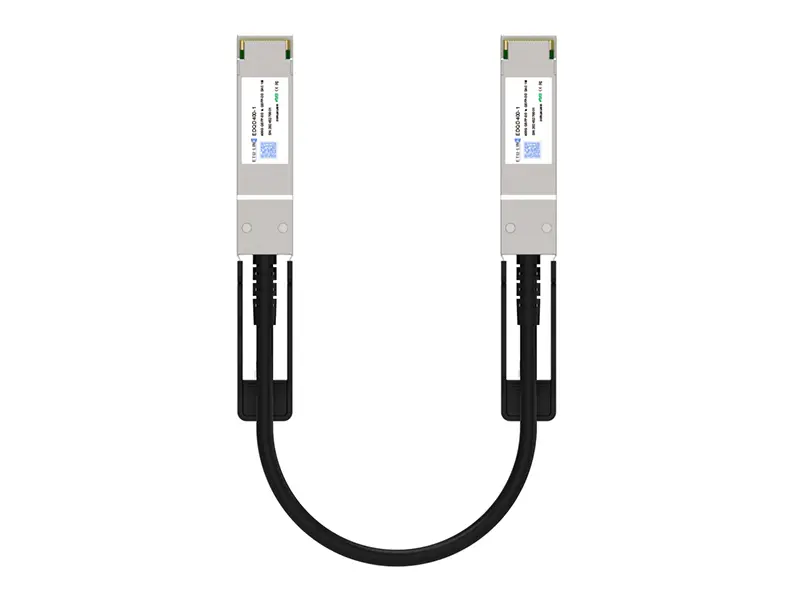 400G QSFP DD DAC
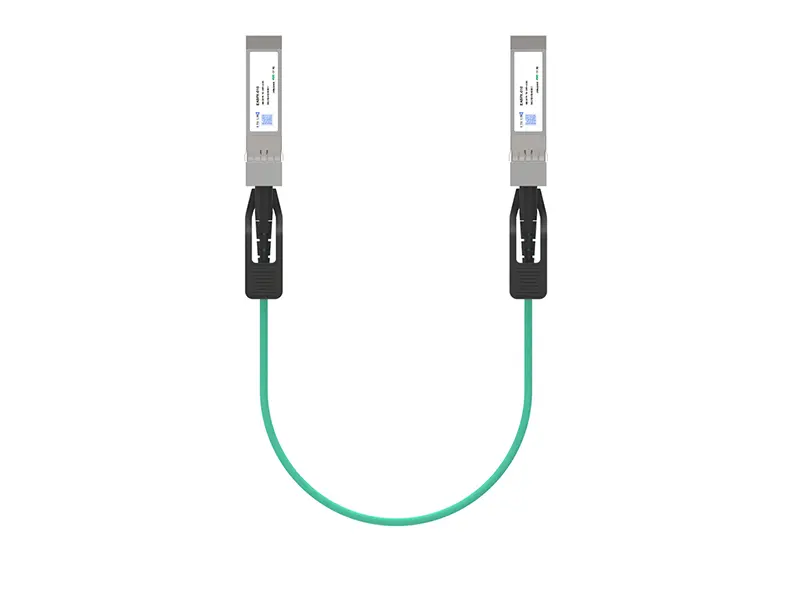 10G SFP+ AOC
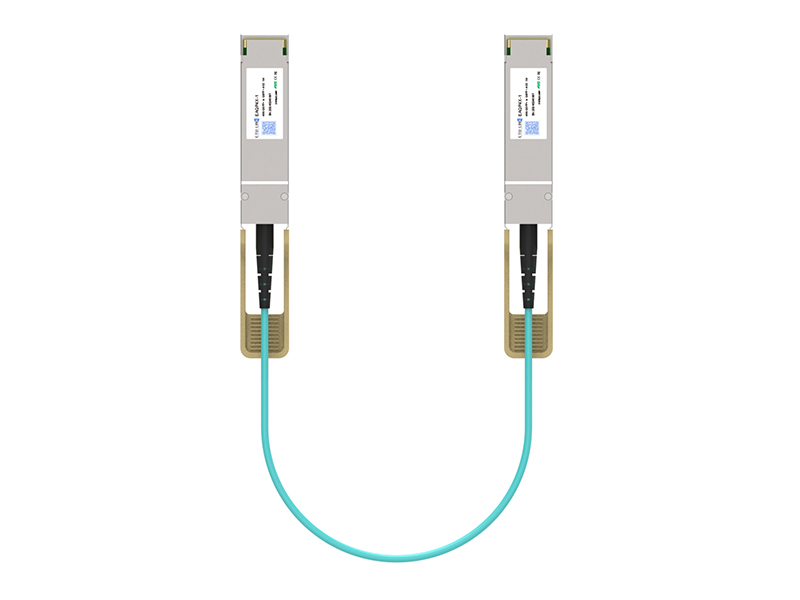 40G QSFP+ AOC
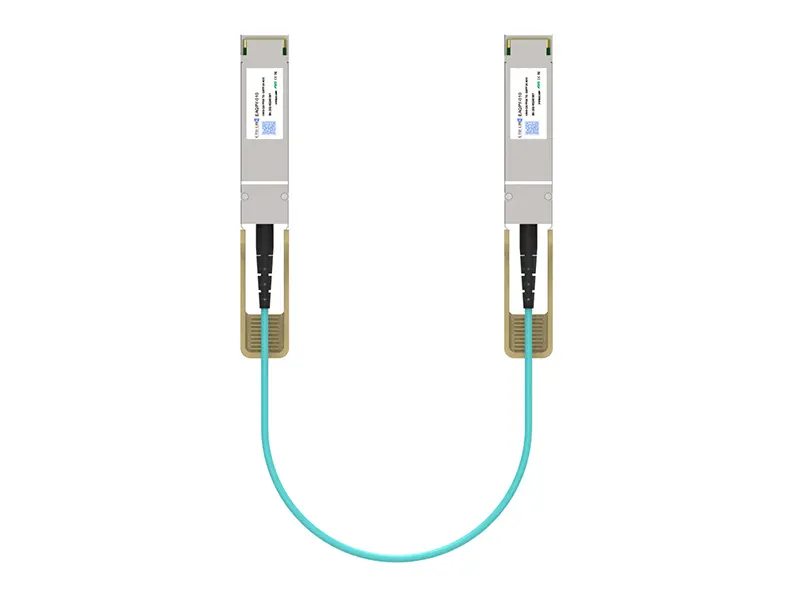 100G QSFP28 AOC
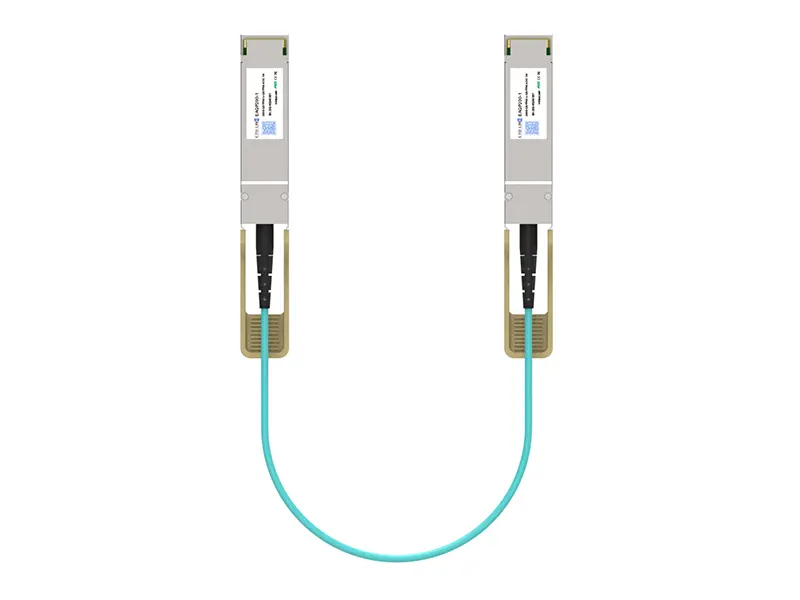 200G QSFP56 AOC
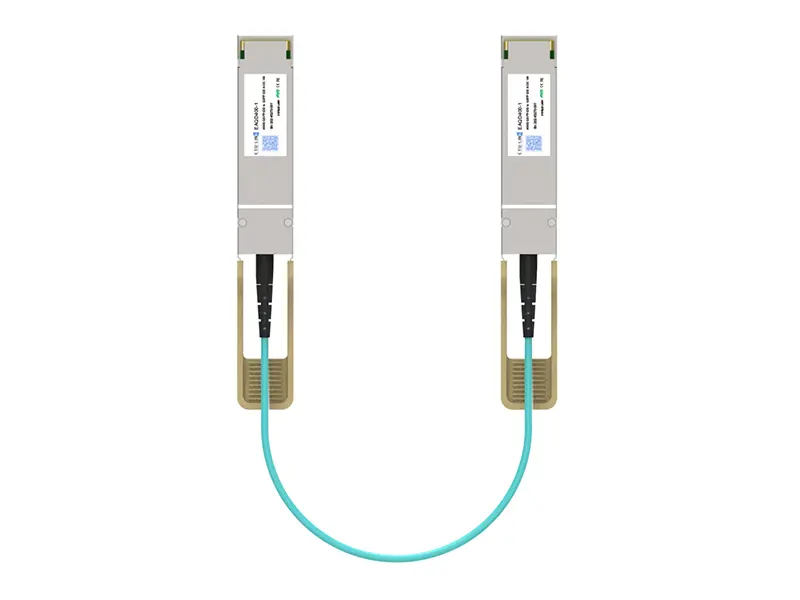 400G QSFP-DD AOC
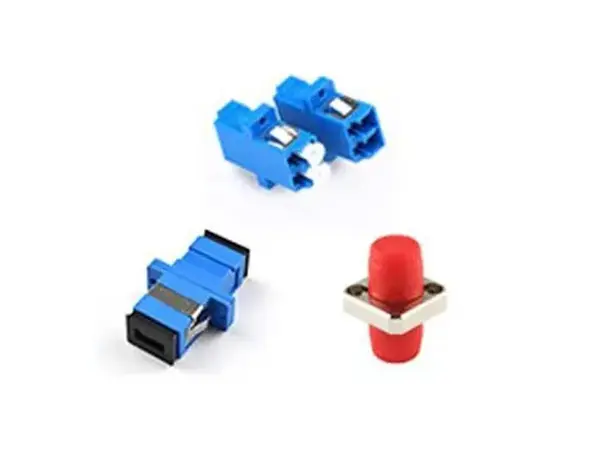 Adapter Details
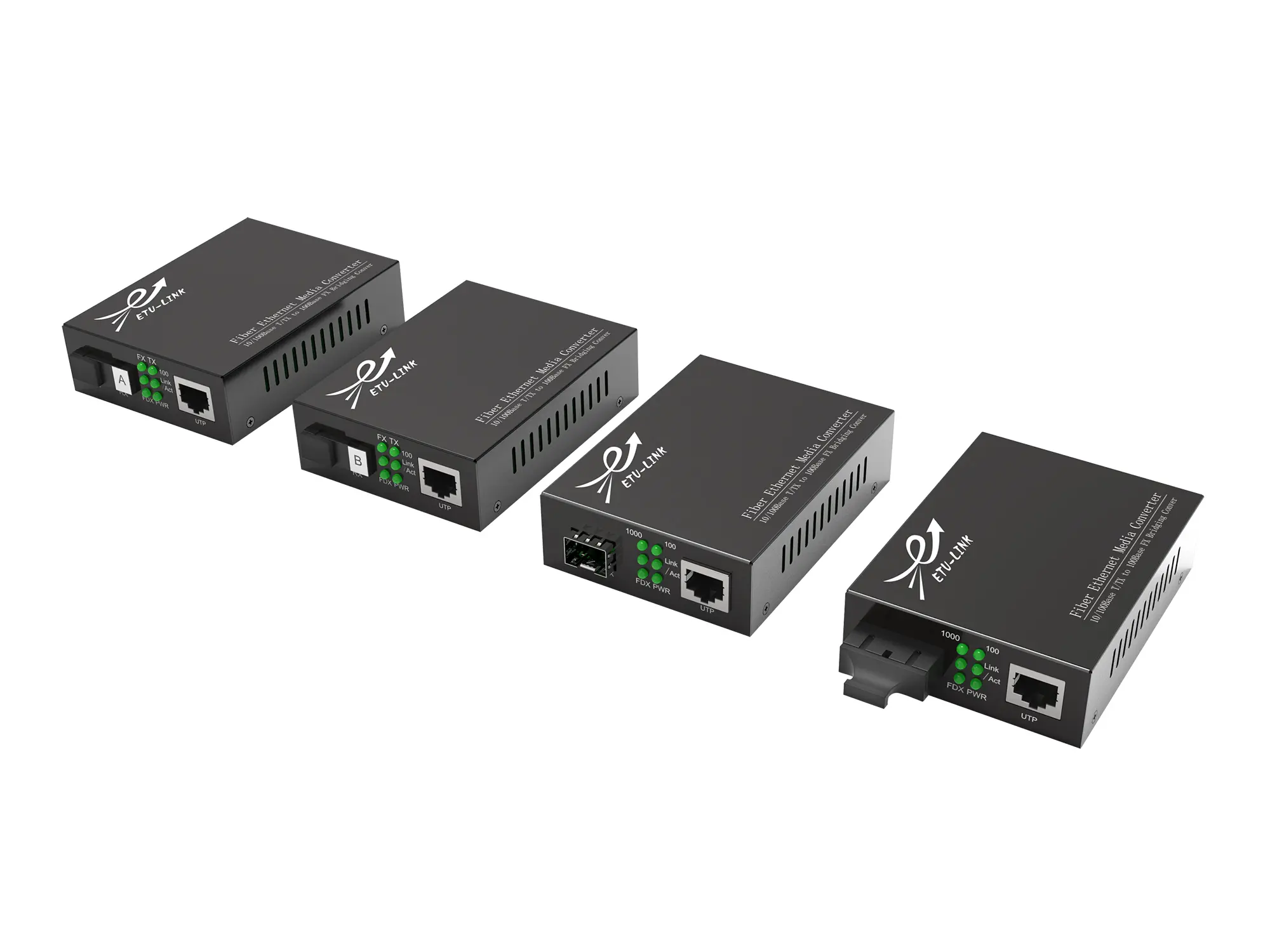 Media Converter